You can grow a beautiful flower garden even if you've never planted anything before. The process really does break down into a handful of repeatable steps, The process really does break down into a handful of repeatable steps, which are the key steps to how to grow flowering plants: figure out your site, fix your soil, pick the right flowers, get them in the ground at the right time, and then keep up with a simple routine until they bloom. That's the whole arc. Everything else is just filling in the details, and that's what this guide does.
How to Grow a Flower Garden: Step-by-Step From Seed to Bloom
James Holloway
24 Mar 2026
Start with your site and soil
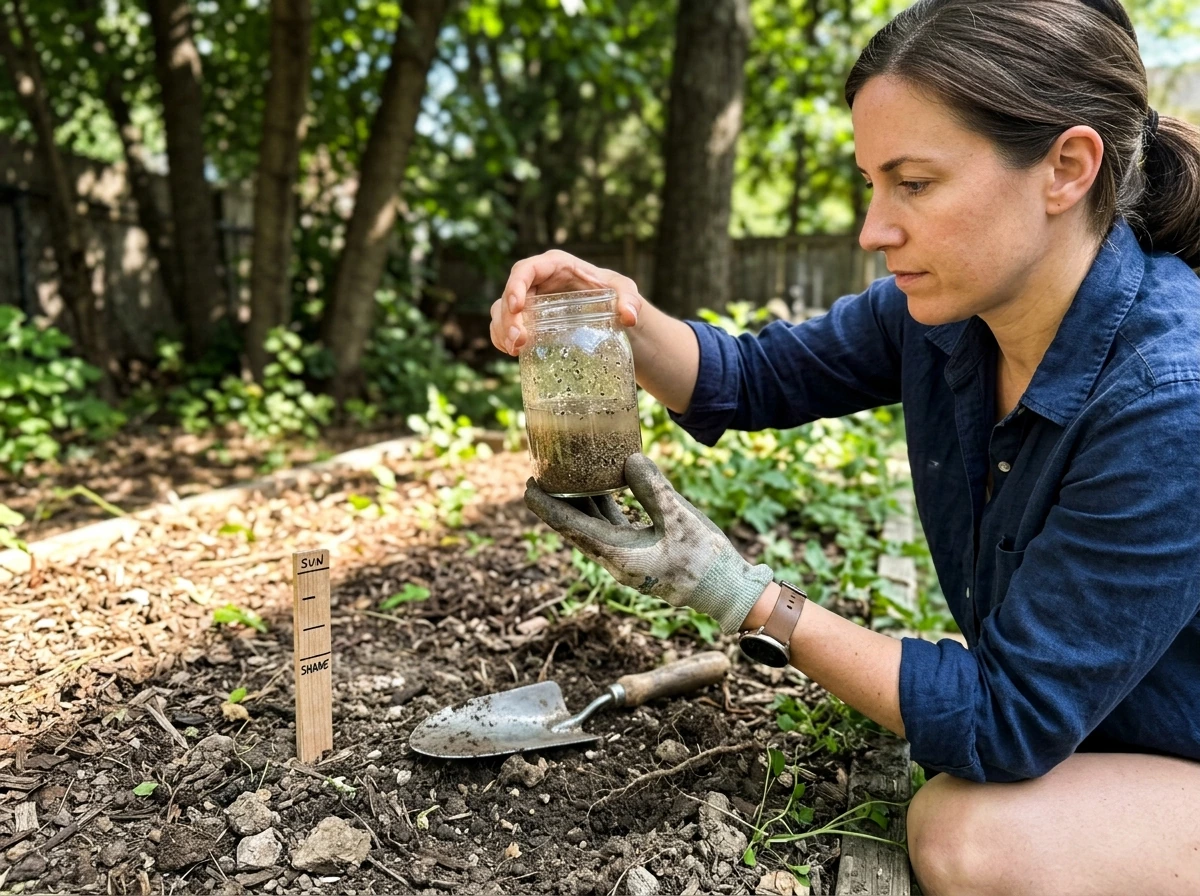
Before you buy a single seed packet, spend a day or two watching your yard. Note which spots get sun and which get shade, and track it hour by hour if you can. Most flowering plants you'll want to grow, including marigolds, zinnias, snapdragons, and poppies, need what's called 'full sun,' which means at least 6 to 8 hours of direct sunlight per day. Part sun or part shade means at least 4 hours. That distinction matters a lot. A bed that looks bright in the morning might actually be shaded by your house or a tree by early afternoon, leaving it short of the threshold for sun-loving flowers. Watching the spot on paper, hour by hour, is the most reliable way to know for sure.
Once you know your light situation, check your soil. Healthy flower garden soil should drain well (water shouldn't pool on the surface for more than a few minutes after rain), feel loose enough to dig a hand into easily, and ideally sit at a pH between about 6.2 and 6.8. Most flowers do well around pH 6.5. You won't know your actual pH without a soil test, and it's worth doing one, especially in a new bed. Your county Extension office can run one for a small fee, or you can use an inexpensive home kit. The test will also tell you if you're missing key nutrients.
The single best thing you can do for almost any soil is add organic matter: compost, aged manure, or a bagged garden amendment. Organic matter loosens heavy clay so roots can breathe and water can drain, and it helps sandy soil hold moisture and nutrients longer instead of letting them wash straight through. Work 2 to 4 inches of compost into the top 8 to 12 inches of your bed before planting. It's the most reliable soil improvement you can make regardless of what you're starting with.
Plan your layout and choose your flowers
A good flower garden layout doesn't have to be complicated, but a little planning now saves a lot of frustration later. The basic principles are: tall plants go toward the back (or center if the bed is viewed from all sides), mid-height plants fill the middle, and low-growing or spreading plants come to the front edge. Group flowers with similar water and sun needs together. And when you're mixing varieties with different spacing requirements in the same bed, divide the bed into zones for each species rather than trying to blend them randomly. This makes spacing easier to follow and gives each plant room to grow without competing.
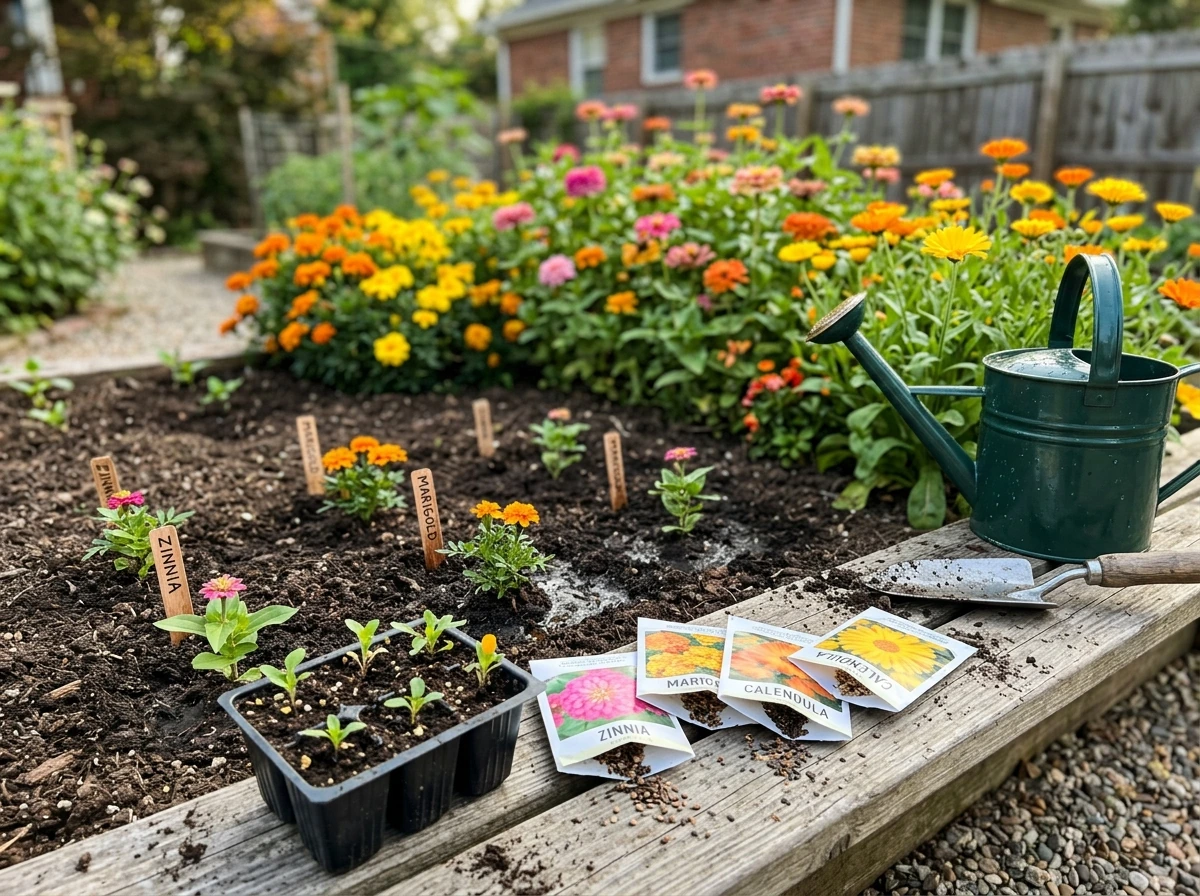
Think about bloom time when you're selecting varieties. If you only choose plants that bloom in June, your garden will look great for three weeks and then go quiet. Instead, layer in early-season bloomers like snapdragons and larkspur, mid-season workhorses like zinnias and marigolds, and late-season performers like dahlias and rudbeckia. That way something is always happening from spring through fall.
For a beginner's first garden, I'd lean toward direct-sow-friendly flowers like marigolds, zinnias, sunflowers, and nasturtiums alongside easy transplants like snapdragons and petunias. Wildflower mixes are also a great way to fill space quickly with very little fuss. If you're interested in cutting garden staples specifically, [stock flowers](/flower-garden-basics/how-to-grow-stock-flower), lisianthus, and cosmos are worth adding because they produce long stems and blooms over a long window.
Seeds vs. transplants: which to use and when
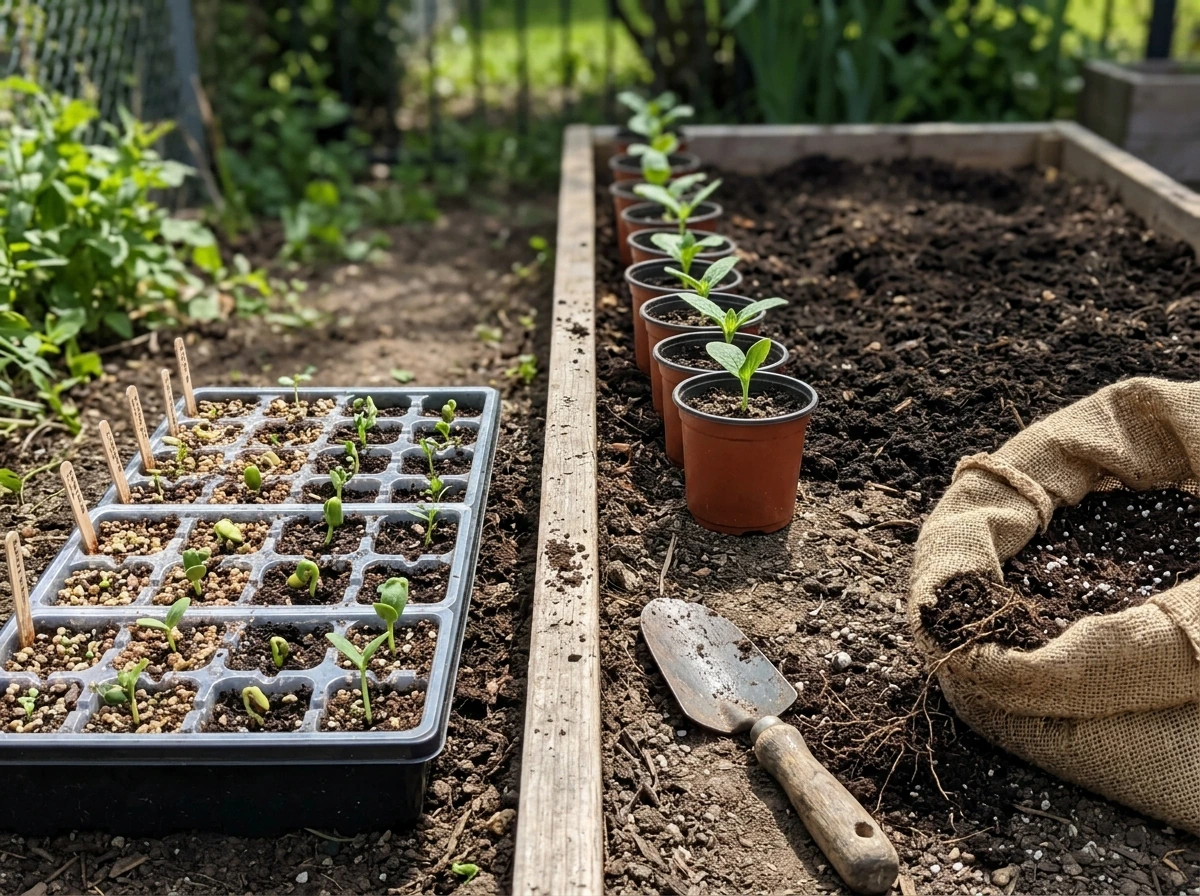
Both approaches work. The choice usually comes down to your timeline, your budget, and which flowers you're growing. Starting from seed is cheaper and gives you far more variety options, but it takes planning and a bit of setup. Buying transplants from a nursery is faster and more forgiving, but you're limited to what's on the shelf, and the cost adds up fast if you're filling a large bed.
Starting seeds indoors
The key to indoor seed starting is working backward from your last spring frost date. Look up your average last frost date for your zip code, then check your seed packet for the 'weeks to transplant' number. Subtract that many weeks from your frost date and that's your indoor sowing date. For example, if your last frost is May 15 and your snapdragons need 10 to 12 weeks indoors, you'd start them in late February or early March. Warm-season flowers that can't handle frost, like zinnias and marigolds, typically need only 4 to 6 weeks indoors. Don't start them too early or you'll end up with tall, leggy seedlings stuck waiting for weather that hasn't arrived yet.
Use a seed-starting mix (not regular potting soil), plant seeds at a depth of roughly three times the seed's widest dimension, and keep the mix consistently moist. Most flower seeds germinate well at 65 to 75 degrees Fahrenheit. A heat mat helps a lot in a cool room. Once seedlings emerge, move them to bright light immediately or they'll stretch toward whatever light they can find and become weak and spindly.
Direct sowing outdoors
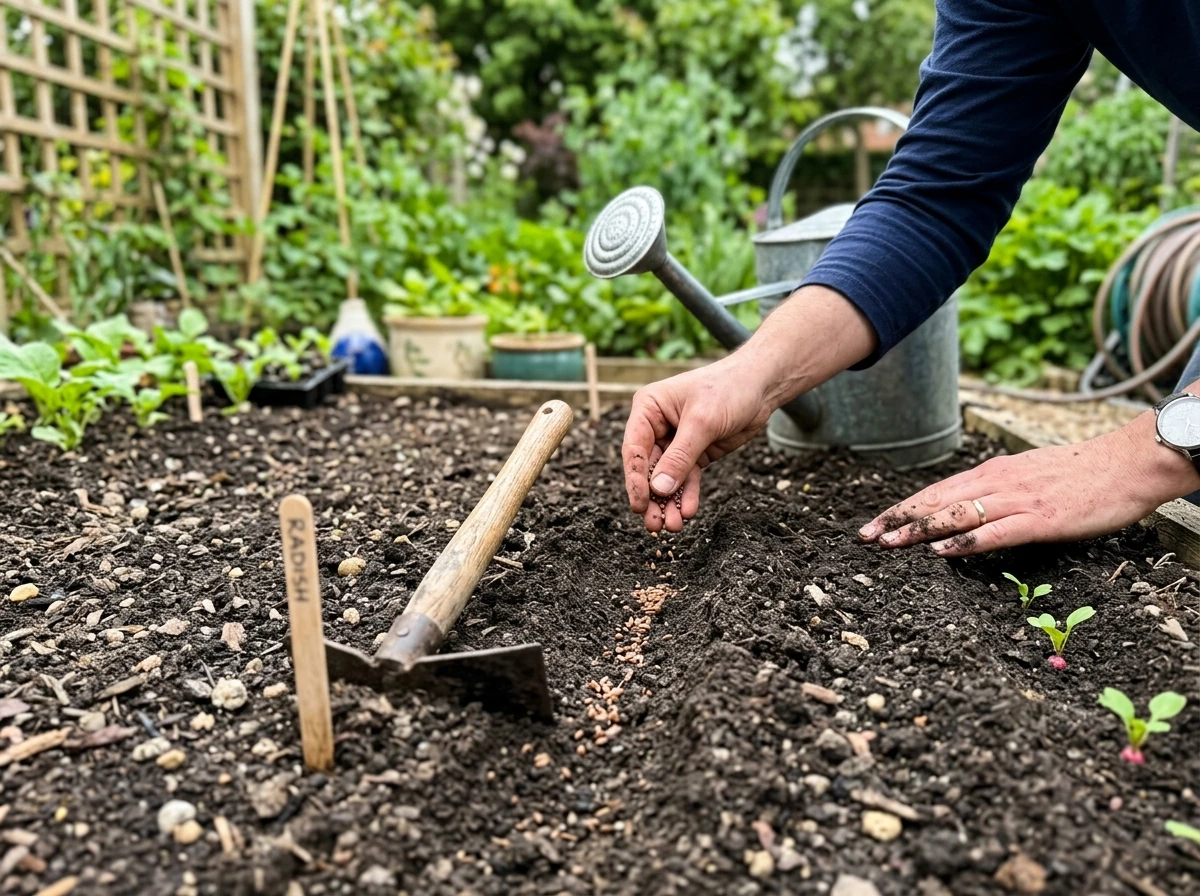
Many flowers actually prefer to be direct-sown where they'll grow. Poppies, larkspur, bachelor's button, and nasturtiums are classic examples. These don't love having their roots disturbed and often germinate faster when they can go straight into the ground. For frost-tolerant types, you can sow outdoors a few weeks before your last frost date. For frost-sensitive types, wait until after your last frost date when soil has warmed a bit.
Buying transplants
If you're buying nursery transplants, timing still matters. Look for compact, dark-green plants with no yellow leaves and no flowers already open (a plant that's already blooming in a tiny pot has often been stressed and may take longer to establish). Buy them when it's close to safe planting time for your zone, and plan to harden them off for at least a week or two before planting: set them outside in a sheltered, partly shaded spot for a few hours each day, gradually increasing exposure to sun and outdoor temperatures. Skipping this step and planting straight from a greenhouse into full sun is a reliable way to lose plants to transplant shock.
| Method | Cost | Variety Options | Time Required | Best For |
|---|---|---|---|---|
| Seed starting indoors | Low | Very wide | 8–12 weeks before transplant | Snapdragons, petunias, stock, lisianthus |
| Direct sowing outdoors | Low | Wide | Minimal setup | Poppies, zinnias, marigolds, nasturtiums, wildflowers |
| Buying nursery transplants | Higher | Limited to what's stocked | Fastest to bloom | Beginners, last-minute planting, filling gaps |
Planting steps and early care
Once your soil is prepped and your timing is right, planting is straightforward. For transplants, dig a hole just as deep as the root ball and a little wider, set the plant in, backfill, and firm the soil gently around the base. Water immediately and thoroughly. For seeds sown directly, follow the packet depth guidance (the three-times-the-seed's-width rule is a reliable baseline when the packet doesn't specify), then pat the surface lightly to make good seed-to-soil contact and water gently.
Once your direct-sown seeds germinate and show their first true leaves (the second set of leaves, which look more like the plant's mature foliage rather than the initial rounded seed leaves), it's time to thin. Thinning means removing crowded seedlings so the strongest ones have room to grow. It feels brutal the first time but it genuinely matters. Crowded seedlings compete for water and nutrients, stay small, and are more vulnerable to disease. Check the spacing on your seed packet and thin to that distance.
After transplanting or thinning, apply a 2 to 3 inch layer of mulch around your plants, keeping it an inch or so away from the stems. Mulch holds moisture, moderates soil temperature, and cuts down significantly on weed pressure. It's one of those simple steps that pays off all season long.
Watering, feeding, and keeping up through the season
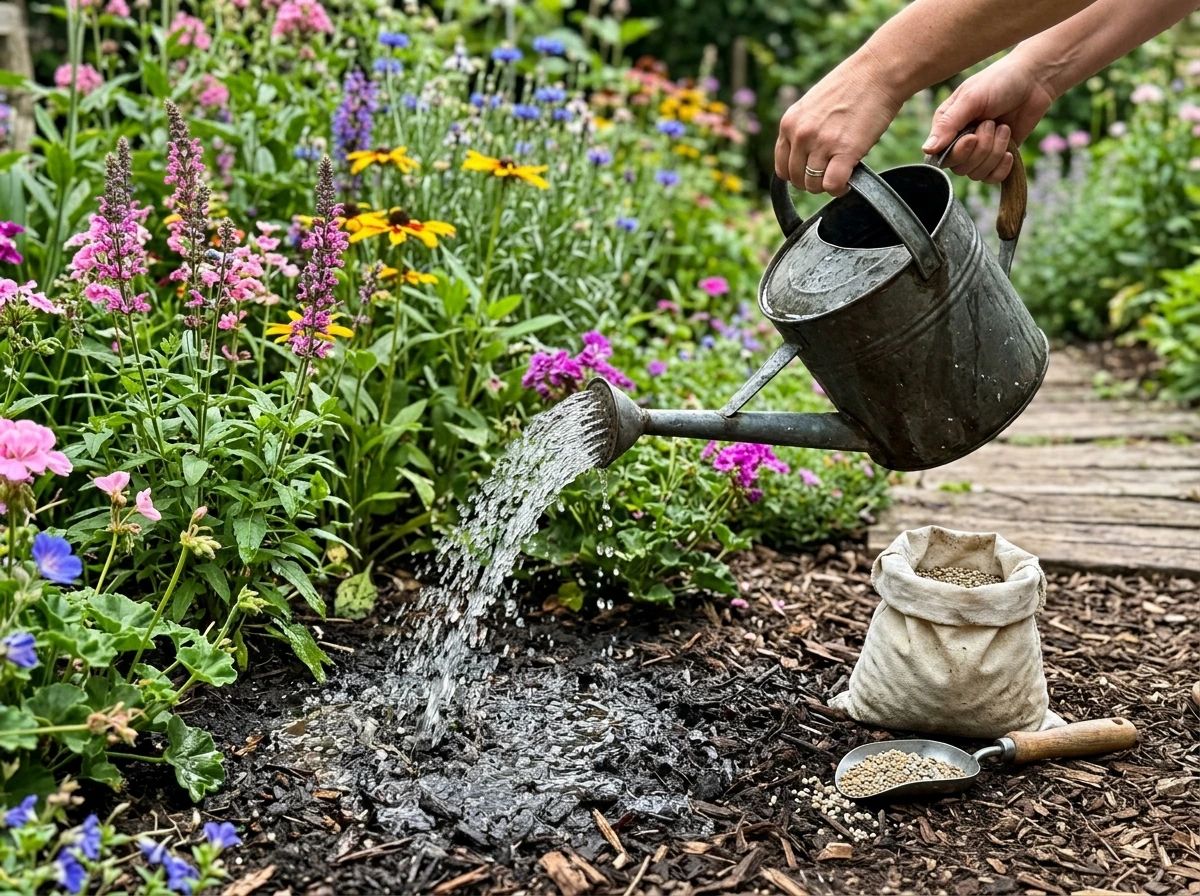
For most established flower gardens, about 1 inch of water per week is the general target. During dry spells, deep watering once a week is more effective than a light sprinkle every day. Deep watering encourages roots to grow down rather than hovering near the surface, which makes plants more resilient in heat. Use a soaker hose or drip irrigation if you can. They're more efficient than overhead sprinklers and they keep foliage dry, which reduces disease risk significantly. If you're hand watering, water at the base of plants. Either way, morning is the best time to water so any moisture that does hit the leaves has all day to dry off.
Fertilizing flower gardens doesn't have to be complicated. If you amended your soil well with compost before planting, you may not need to feed at all early in the season. Once plants are actively growing and setting buds, a balanced granular fertilizer or a liquid bloom formula applied every few weeks can encourage stronger flowering. Avoid overdoing nitrogen (the first number on fertilizer labels) or you'll get lots of lush foliage and few flowers. For most annuals, a fertilizer with a higher middle number (phosphorus) supports bloom production.
As the season progresses, deadhead regularly. Deadheading means removing spent flowers before they set seed. It sounds fussy but it's one of the most impactful things you can do. When a plant successfully makes seeds, it considers its job done and slows down flowering. Remove those faded blooms and the plant redirects its energy back into producing more flowers. For most annuals you can just pinch or snap off the spent flower head back to the nearest set of leaves or a bud. Do this once a week and your garden will stay in bloom dramatically longer.
Dealing with weeds, pests, and disease
Weeds are the most constant maintenance task in any flower garden. Mulch is your best long-term defense because it blocks light from reaching weed seeds at the soil surface. Pull weeds when they're small and before they flower or seed, because one weed that goes to seed can scatter hundreds of new problems across your bed. In early spring and again in midsummer, spend 15 minutes a week on weeding and you'll stay ahead of it. Let it go for a month and you'll spend a whole weekend catching up.
Common flower garden pests include aphids, spider mites, thrips, and slugs. Aphids cluster on new growth and can be knocked off with a strong stream of water or treated with insecticidal soap. Slugs do their damage at night, leaving ragged holes in leaves. They're most active in cool, moist conditions and can be controlled with slug bait or by reducing the damp hiding spots near your plants. Before reaching for any pesticide, try the physical removal or water-spray approach first. Many pest problems in a healthy garden are minor and manageable without chemicals.
Disease is most often the result of wet foliage, poor air circulation, or planting too densely. Fungal diseases like powdery mildew and black spot (common on roses) spread quickly in humid conditions. For powdery mildew, improving air circulation by thinning crowded plants often helps more than spraying. For black spot, the most important step is sanitation: remove infected leaves promptly and dispose of them (don't compost them), and keep mulch fresh so old spores don't splash back up onto plants from the soil. If you need to treat, fungicide sprays applied on a 7 to 14 day schedule starting when leaves first emerge can help keep it under control. Water in the morning, not at night, and water at the base of plants rather than overhead. These habits alone prevent a large percentage of disease problems.
Getting to bloom and making the most of it
If your plants are growing well but not flowering, there are a few common culprits. Too much nitrogen pushes leafy growth at the expense of flowers, so ease back on feeding if plants look lush but bare. Insufficient sunlight is probably the most common reason for poor blooming in home gardens. If a bed that was sunny in spring gets shaded out by nearby trees leafing in, that can genuinely reduce flowering. And some flowers simply take longer than expected: lisianthus, for example, can take 5 to 6 months from seed to bloom and is notorious for testing patience.
If seeds fail to germinate at all, the most likely causes are seeds sown too deep, soil that's too dry or too wet during germination, or soil temperature that's too cold for warm-season species. Don't give up too fast. Mark the spot, keep it moist, and give it a full two weeks before deciding nothing is coming up. And if germination is sparse, just thin to the best seedlings and move on. A half-full row of strong plants outperforms a packed row of weak ones every time.
One of the best finishing moves for a flower garden is planning it as a cutting garden from the start. Flowers like zinnias, cosmos, snapdragons, marigolds, and stock all produce more blooms when you cut them regularly. Cutting a stem just above a leaf node or a lateral bud signals the plant to branch and produce more. Harvest flowers in the early morning when stems are fully hydrated, cut at an angle, and get them straight into water. If you're growing flowers for arrangements, cutting twice a week keeps plants producing all season.
The first time you cut a vase full of flowers from something you grew yourself from seed, it genuinely feels like a win. And it should. That's exactly what it is. Start with one small bed, nail the basics, and expand from there. Every season you'll get better at reading your site, choosing the right varieties for your conditions, and timing everything more precisely. The learning curve in flower gardening is real, but it's forgiving, and the payoff is hard to beat.
FAQ
Can I grow a flower garden if my yard gets less than 6 hours of direct sun?
Yes, but you need to match flower choices to your light and soil. Focus on reliable, sun-loving annuals only where you get the required hours, and for shadier spots choose shade-tolerant plants (for example impatiens or begonias) rather than trying to force full-sun varieties to bloom.
What’s the easiest way to lay out a mixed flower bed as a beginner?
In most beginner beds, start by setting up one simple zone with similar sun exposure and water needs. If you want to add different plants, create separate sections and keep your spacing rules intact, because mixing large and small plants in the same tight area often leads to crowding and weak flowering.
How often should I test soil, and what should I do if my pH is outside the ideal range?
If you don’t know your soil, do one test before you add amendments beyond compost. Compost helps almost every soil, but if your pH is far off you may not get good flowering, even with plenty of nutrients. Use test results to decide whether to adjust pH (lime for low pH, sulfur for high pH) rather than guessing.
How much should I water after planting seeds or transplants?
Aim to keep the planting zone evenly moist until germination and establishment, then shift to deeper, less frequent watering. A common mistake is watering lightly every day, which keeps roots near the surface and makes plants more heat-stressed later.
My seedlings are leggy, what should I fix first?
If your seedlings look stretched even though you watered correctly, the most likely cause is insufficient light. Move them closer to the light source as soon as they emerge, and consider using a simple grow light on a timer to keep light consistent.
Is thinning really necessary if the bed still looks full?
For direct-sown areas, thin at the right time and follow the spacing on the packet. Letting crowded seedlings stay bunched forces them to compete and often results in smaller, fewer blooms than you’d get by thinning early.
When should I deadhead, and what if my plants already started forming seed pods?
Yes, deadheading is especially important for plants that keep making seed pods. Once you see seed development, many species slow flowering, so remove spent blooms before the seed matures to keep the bloom cycle going longer.
Why are my plants growing lots of leaves but not many flowers, and what should I adjust?
Fertilize based on plant behavior. If leaves are lush but buds are scarce, reduce or stop nitrogen-heavy feeding and wait for more natural bloom response. Also, avoid fertilizing right after transplanting or during heat waves, since stress can make plants use nutrients poorly.
How should I apply mulch so it helps flowers instead of causing problems?
Use mulch, but keep it away from stems. Mulch piled directly against the plant crown can encourage rot and pest hiding spots, especially in damp weather.
What’s a good first response when I spot aphids, spider mites, or slugs?
If pests appear, start with the least disruptive option. A strong water spray can knock off aphids, and hand removal works for a few slugs or caterpillars. When you do use treatments, target the specific pest and apply at times that match their activity to avoid unnecessary repeated spraying.
How can I prevent powdery mildew and black spot without heavy chemicals?
Yes, and it matters where water goes. Watering in the morning and at the base reduces leaf wetness, but also avoid overhead watering during evening conditions. For dense plants, improve airflow by thinning and spacing so leaves dry faster.
Why does it sometimes take a long time to see flowers when starting from seed?
Choose plants that match your expected season length. Some flowers take many months to bloom from seed, so if your spring is short you may need transplants or select faster-blooming varieties to avoid waiting until too late.
What should I check if none of my seeds germinate?
Yes. Many failures come from timing and setup issues, especially sowing too deep or sowing warm-season seeds when soil is still cold. Mark your sowing spot, check depth, and give germination a full window before re-sowing so you don’t disturb emerging seedlings.
I want cut flowers, how do I harvest in a way that increases future blooms?
If you’re planning for cut flowers, harvest regularly and cut above a leaf node or lateral bud to encourage branching. Also harvest early in the day, recut stems at an angle, and put cut flowers into water immediately so blooms stay fresh longer.
Next Articles
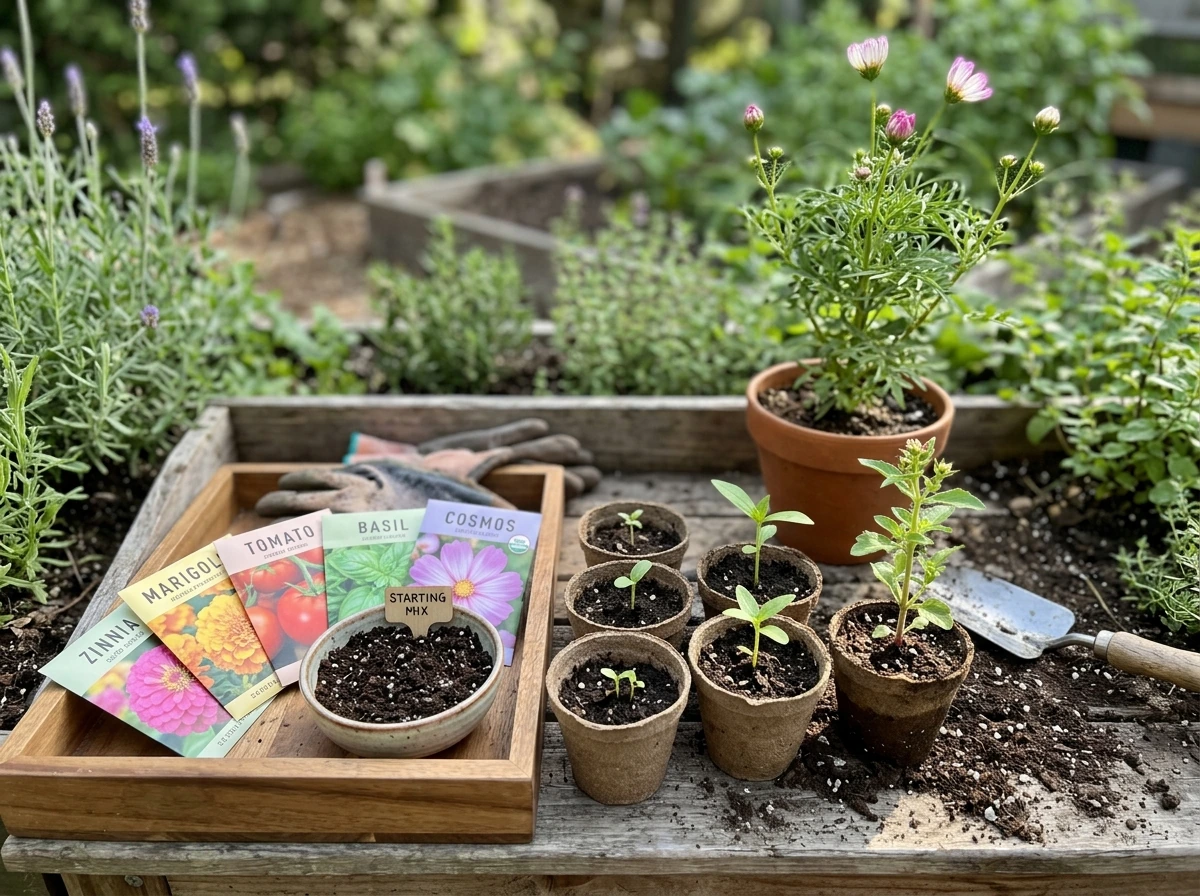
How to Grow Flower: Seed to Bloom and THCA Flower Basics
Step-by-step how to grow flowers from seed to bloom plus separate THCA flower cultivation basics, setup, stages, and tro
How to Grow Duck Flower: Step-by-Step Care and Blooms
Step-by-step guide to grow duck flower from seed to blooms, with care tips, troubleshooting, and seasonal timing.
Wildflower Seeds How to Grow Them From Seed Step by Step
Step by step guide to grow wildflowers from seed: choose mixes, plant timing, soil prep, sowing, watering, and weed cont