Strawflowers are one of those flowers that reward you twice: first with a long season of papery, jewel-toned blooms in the garden, and then again as dried flowers, so if you’re looking for how to grow duck flower, this is a close alternative that also works great for drying for months indoors. They're also genuinely easy to grow from seed, which makes them a great pick whether you're just starting out or you're adding a reliable cutting-garden staple to an established setup. Here's exactly how to grow them, from choosing a variety all the way through harvesting and drying.
Strawflowers How to Grow From Seed to Bloom and Cut
James Holloway
24 Mar 2026
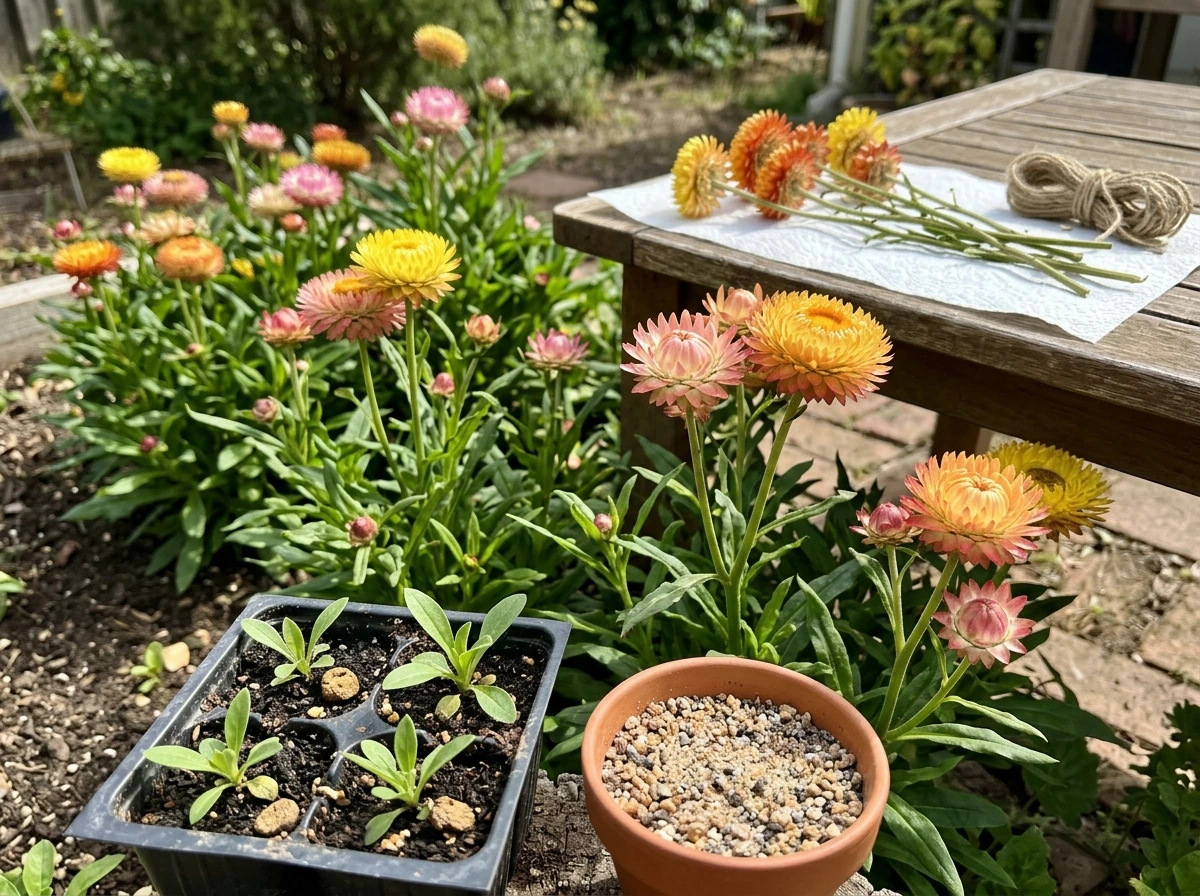
What strawflowers are and what you'll need to get started
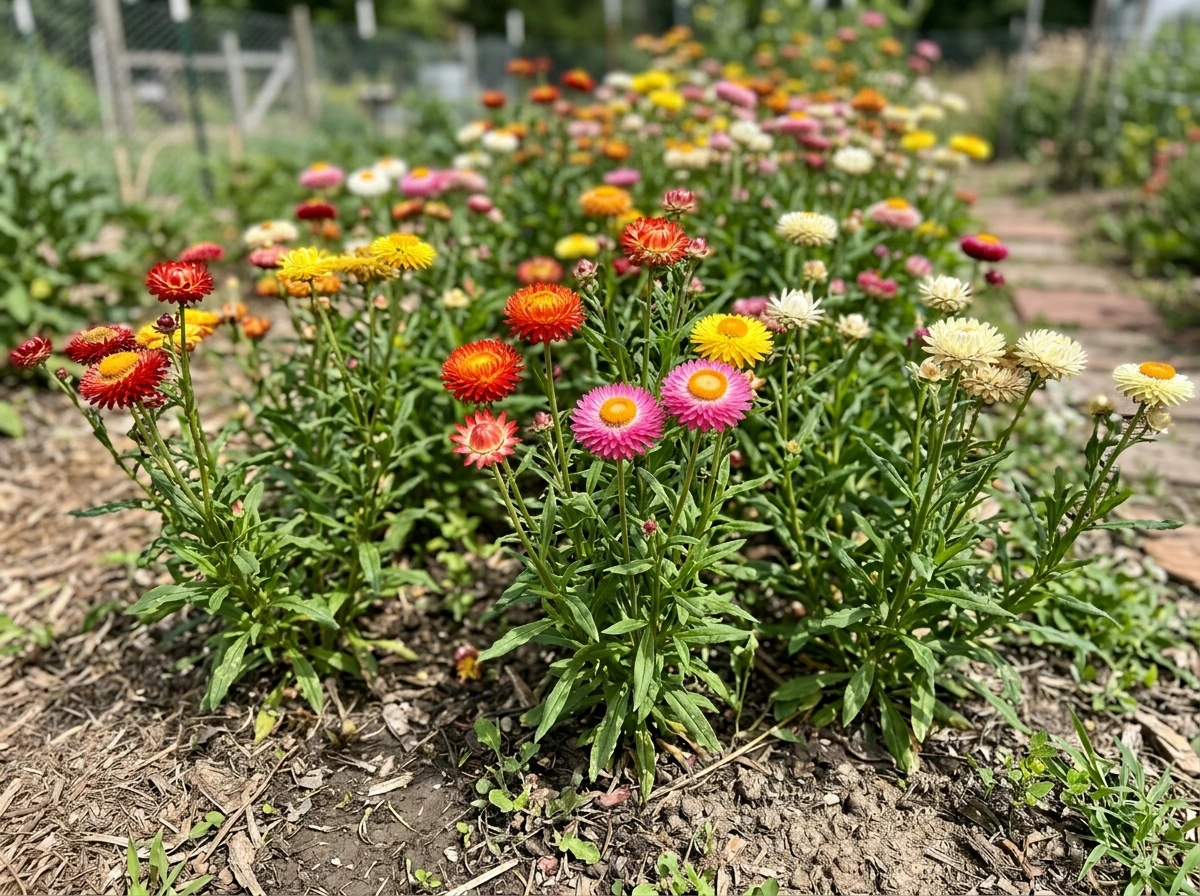
Strawflowers (Xerochrysum bracteatum, formerly Helichrysum bracteatum) are Australian natives that produce stiff, papery blooms in shades of red, orange, yellow, pink, white, and deep burgundy. Depending on your climate, they can behave as short-lived tender perennials or annuals. Most gardeners outside of mild, frost-free climates grow them as annuals and start fresh from seed each year, which is exactly what this guide focuses on.
Height varies a lot by variety, ranging from compact 12-inch dwarf types all the way up to 5-foot tall cutting-garden giants, so it's worth knowing what you're growing before you place them in your beds. Bloom time typically runs mid-summer through fall for most varieties, though some will start earlier if you get them going indoors.
Here's what you'll need to grow strawflowers successfully:
- Strawflower seeds (or starts if you're buying transplants)
- Seed-starting mix for indoor starts, or well-draining garden soil for direct sowing
- Seed trays or small pots if starting indoors
- A warm, bright spot or grow lights for germination
- A full-sun garden bed or large containers
- Balanced fertilizer (liquid or slow-release granular)
- Scissors or pruning snips for harvest
Pick the right variety and plan your timing
Variety choice matters here more than with some flowers. If you want tall stems for cutting and drying, go for a taller cultivar. If you're growing in containers or a small rock garden, a compact dwarf type is a much better fit.
Varieties worth knowing
| Variety | Height | Best Use | Notes |
|---|---|---|---|
| Bright Bikinis | 18–36 in (45–90 cm) | Borders, cutting garden | True annual; blooms mid-summer to mid-fall; vivid mixed colors |
| Kingsize Mixed | Up to 4–5 ft (120–150 cm) | Cutting rows, back of border | Tall stems ideal for drying bunches |
| Forever Mix | 2–3 ft | Cutting garden, borders | Mixed colors; reliable germinator |
| Diamond Head | 2–3 ft | Cutting garden | Good color range; strong stems |
| Monstrosum Finest Mix | 2–3 ft | Short-season gardens, containers | Early-flowering; works well in cooler or shorter growing seasons |
| Bright Bikini (dwarf) | 12–18 in | Containers, rock gardens, edging | Compact habit; great for small spaces |
| Granvia Pink | 12–18 in | Containers, mixed borders | Short-lived perennial in mild climates; treat as annual elsewhere |
If you're new to strawflowers, I'd suggest starting with 'Bright Bikinis' or 'Forever Mix.' Both are forgiving, germinate reliably, and give you a decent mix of colors without requiring perfect conditions.
Starting indoors vs. direct sowing
In most of the continental US (zones 3–8), the better approach is to start seeds indoors 6 to 8 weeks before your last frost date. That gives you a head start and means you'll see blooms in summer rather than waiting until late fall. If you're in zones 9–11 or have a long growing season, you can direct sow outdoors after your last frost once soil temps hit around 70°F.
For reference: if your last frost is around mid-May (common in zones 5–6), start seeds indoors in late March or early April. If your last frost is late March (zones 7–8), start seeds in early to mid-February. For most readers in the northern US, mid-March to early April is the sweet spot for indoor starting.
Direct sowing works well in warmer climates or if you're short on indoor space. Just know that direct-sown plants will bloom later in the season, typically mid-to-late summer at the earliest.
Soil, sunlight, and setting up your growing space
Strawflowers are not fussy, but they do have a few non-negotiables. Get these right and the rest is pretty easy.
Sunlight
Full sun is essential. Strawflowers need at least 6 to 8 hours of direct sunlight per day. In partial shade, they'll get leggy, produce fewer blooms, and be more prone to disease. If your garden has a shady corner, save it for something else and put your strawflowers in the sunniest spot you have.
Soil and drainage
Well-draining soil is the other big requirement. Strawflowers are native to Australia and are built for dry, lean conditions. They hate sitting in wet or waterlogged soil, which leads to root rot quickly. Sandy or loamy soil is ideal. If your garden soil is heavy clay, mix in compost and coarse sand or perlite to improve drainage before planting.
Soil pH between 6.0 and 7.0 is the target range. Most garden soils fall naturally within this window, so you probably don't need to adjust unless you know your soil is very acidic or alkaline.
Containers and raised beds
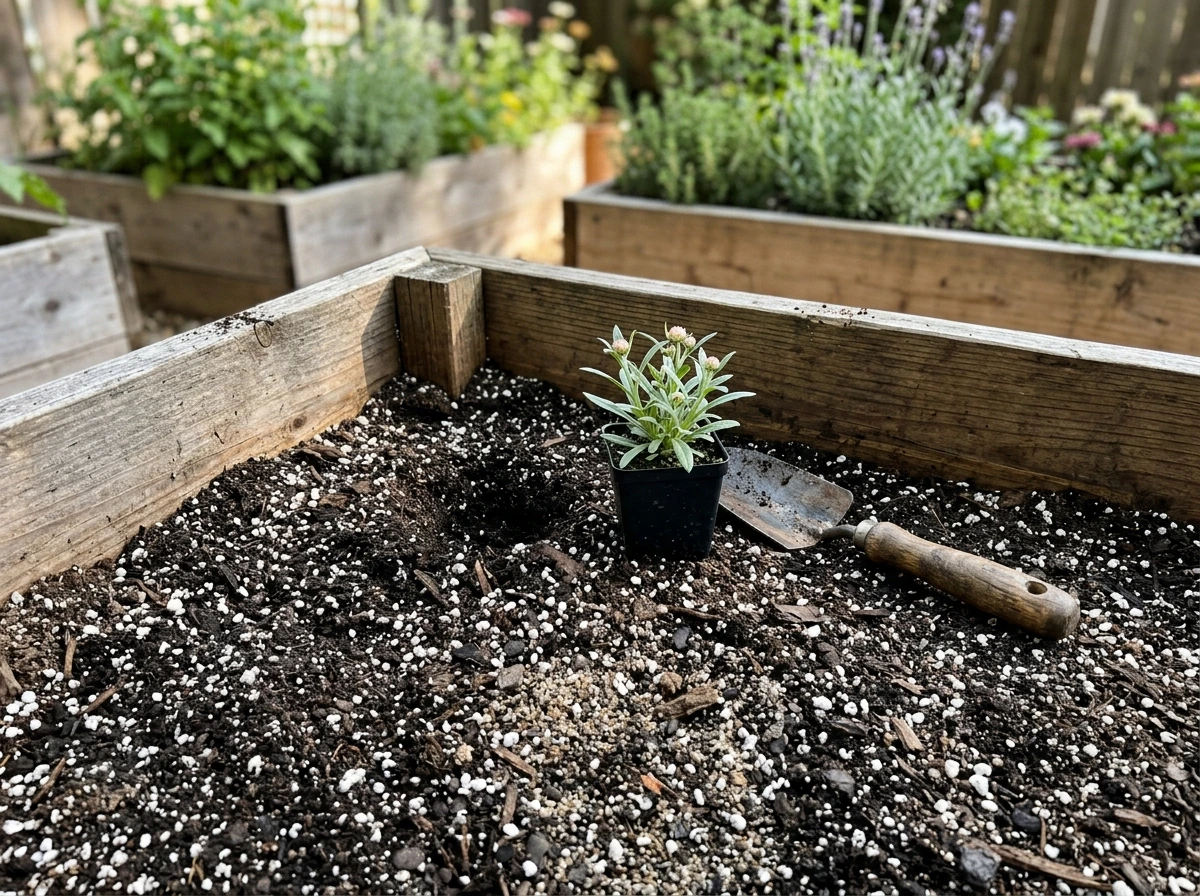
Strawflowers do well in containers, especially dwarf varieties. Use a pot that's at least 10 to 12 inches in diameter for a single plant, or a larger planter for groupings. Make sure the container has drainage holes. Raised beds are also excellent because drainage is naturally better than in ground-level clay-heavy garden beds.
How to plant strawflowers and care for them early on
Starting seeds indoors
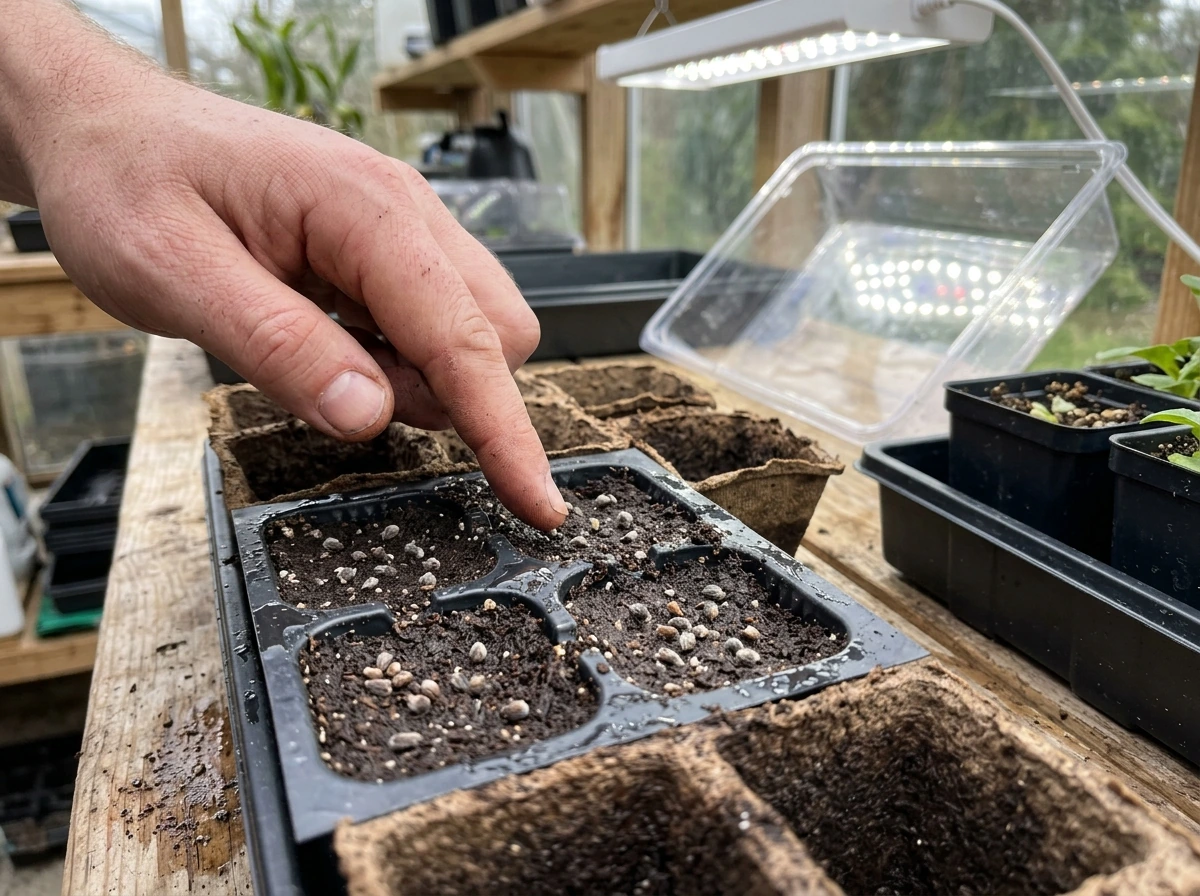
- Fill seed trays or small pots with moistened seed-starting mix.
- Sprinkle seeds on the surface. Strawflower seeds need light to germinate, so do not cover them with soil. Press them lightly onto the surface so they make good contact with the mix.
- Place the trays in a warm location. Germination is best at soil temperatures between 70–75°F. A heat mat speeds things up noticeably.
- Keep the surface consistently moist but not soaked. A spray bottle works better than watering from above, which can dislodge the tiny seeds.
- Expect germination in 7 to 14 days under good conditions. Once seedlings appear, move them to your brightest window or place them under grow lights for 14 to 16 hours a day.
- Thin to the strongest seedling per cell once they have their first true leaves.
- About one to two weeks before transplanting outdoors, start hardening off seedlings. Set them outside in a sheltered spot for a few hours a day, gradually increasing exposure over 7 to 10 days.
Transplanting outdoors
Transplant after your last frost date, once nighttime temps stay reliably above 50°F. Dig holes spaced 9 to 12 inches apart for dwarf varieties, or 12 to 18 inches for taller types. Set plants at the same depth they were growing in their pots. Water in well after planting and keep soil consistently moist for the first week or two while they establish.
Direct sowing outdoors
Rake the soil surface smooth, broadcast seeds thinly, and press them into the soil without covering. Keep the area moist until germination. Once seedlings are 2 to 3 inches tall, thin them to the recommended spacing for your variety.
Watering, feeding, spacing, and keeping plants healthy
Watering
Once established, strawflowers are surprisingly drought-tolerant. Water deeply but infrequently, letting the top inch or two of soil dry out between waterings. In hot summer weather, that might mean watering every 5 to 7 days in the ground, or every 2 to 3 days in containers. The biggest mistake I see is overwatering. If leaves start yellowing and the soil is damp, back off on water before anything else.
Feeding
Strawflowers actually prefer lean soil and don't need heavy feeding. Too much nitrogen pushes leafy growth at the expense of flowers. A balanced slow-release granular fertilizer (something like 10-10-10) worked into the soil at planting time is usually enough for the season. If you want to give them a boost mid-summer, a diluted liquid fertilizer applied once or twice is fine. Skip the high-nitrogen lawn fertilizers entirely.
Spacing and growth management
Proper spacing really matters for airflow, which directly reduces disease risk. As a general rule: 9 to 12 inches apart for compact varieties, 12 to 18 inches for medium types, and up to 18 to 24 inches for the tallest cultivars. Taller plants may need staking in exposed, windy spots. Pinching the growing tips when plants are about 6 inches tall encourages bushier growth and more flower stems, which is worth doing if you're growing them for cutting.
Pests, diseases, and what to do when things go wrong
Common pests
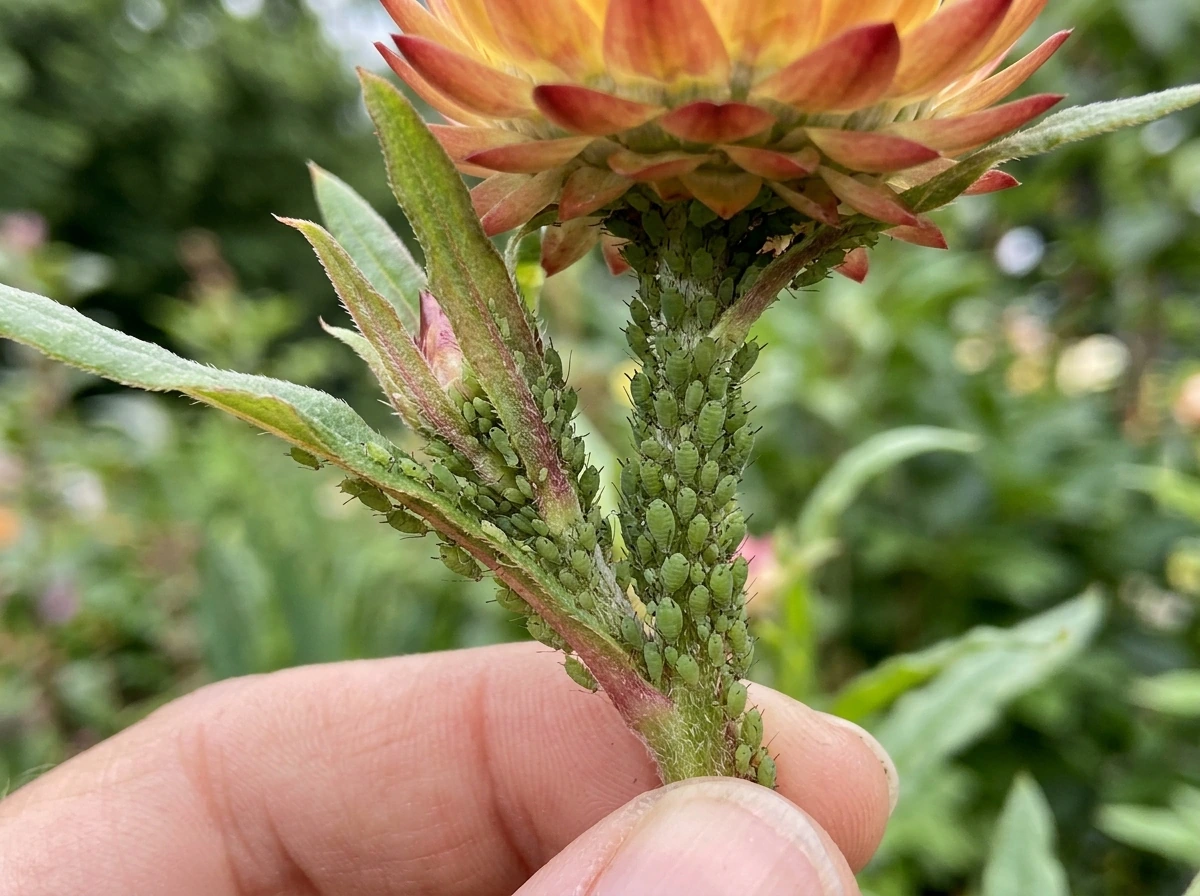
Strawflowers are relatively pest-resistant, which is one of the reasons I like them. The pests you're most likely to see are aphids and thrips. Aphids cluster on new growth and flower buds; a strong spray of water knocks most of them off, or use insecticidal soap for heavier infestations. Thrips cause silvery streaking or distortion on petals and leaves. Neem oil applied in the evening works well as a treatment and deterrent.
Diseases
Root rot from overwatering or poor drainage is the most common problem by far. If plants suddenly wilt and look mushy at the base, check your drainage and watering routine. There's not much to save at that point, but you can adjust conditions before replanting. Powdery mildew can show up in humid conditions or when plants are crowded. Improving airflow through proper spacing and avoiding overhead watering late in the day prevents most cases.
Not blooming or weak growth
If your plants are leafy and green but not flowering, the most likely culprits are too much shade, too much nitrogen fertilizer, or plants that simply need more time. Strawflowers are long-season bloomers, and if you direct-sowed late, don't panic if you're still waiting in early July. Give them full sun and lay off the nitrogen. If growth looks weak and pale across the board, check whether the roots are sitting in soggy soil or whether the plants need a bit of balanced fertilizer to get going.
Poor germination
If you got very little germination, the two most common reasons are that seeds were buried (remember, they need light to germinate) or the soil was too cold.
How and when to harvest strawflowers for drying
This is where strawflowers really earn their place in the cutting garden. Harvest at the right moment and you'll have blooms that hold their color and shape for a year or more. Wait too long and the petals will shatter.
When to cut
Cut strawflowers when the blooms are about one-half to three-quarters open. The center of the flower should still be partially closed. At this stage the papery bracts are stiff and the flower will continue to open slightly as it dries, ending up fully open and beautiful. If you wait until flowers are fully open, they'll often fall apart during or after drying. This is probably the single most important tip for getting good dried strawflowers.
How to cut and dry them
- Cut stems in the morning after any dew has dried, using clean sharp scissors or snips.
- Cut as long a stem as possible, ideally 12 to 18 inches, cutting just above a leaf node to encourage more branching and future blooms.
- Strip the lower leaves from the stems.
- Bundle 8 to 10 stems together and secure with a rubber band near the base. Rubber bands work better than string because they contract as stems dry and shrink.
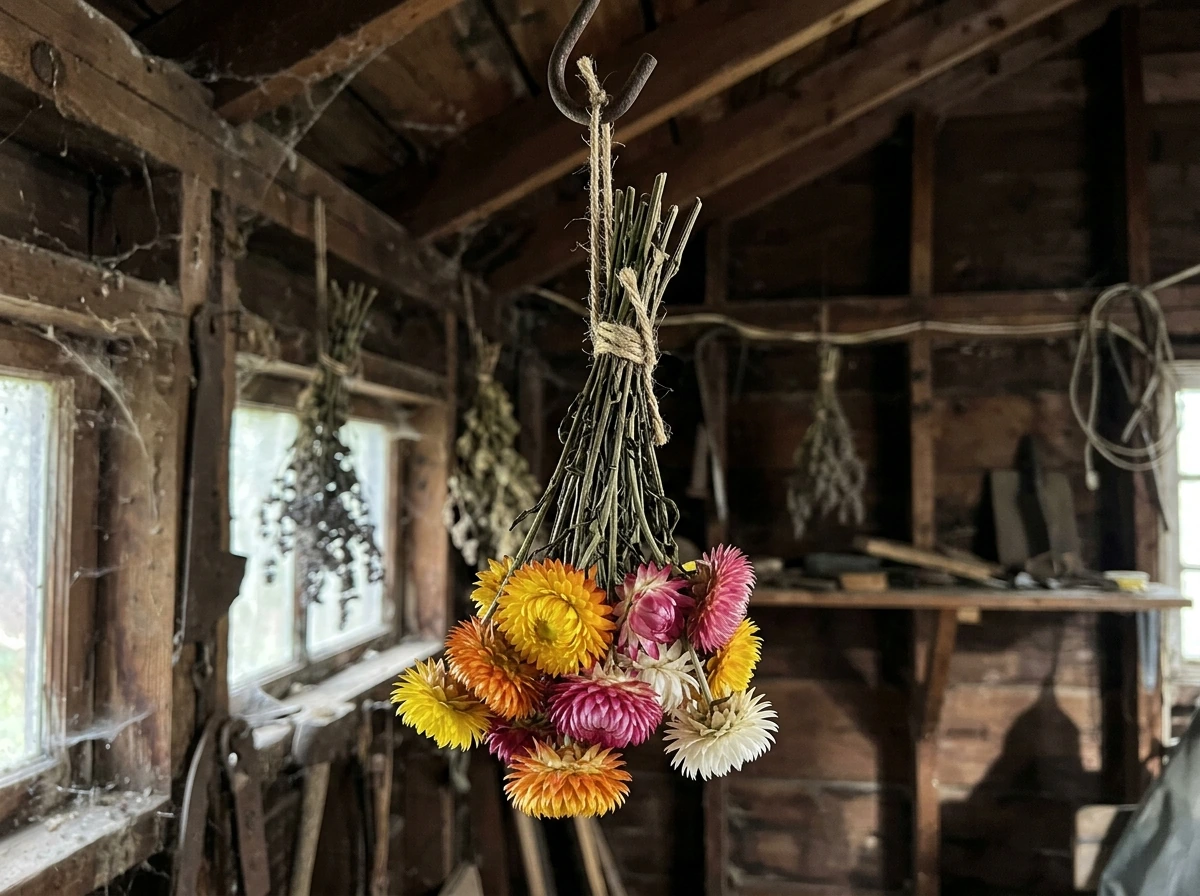
- Hang bundles upside down in a warm, dark, dry location with good airflow. A closet, barn, or dry shed works well. Avoid high humidity or direct sunlight, which fades colors.
- Check after two to three weeks. Stems should feel brittle and dry throughout. Flowers dried this way hold their color well and can last a year or more in arrangements.
Keeping the harvest going
The more you cut, the more strawflowers will bloom. Regular harvesting keeps plants productive throughout summer and into fall. If you let flowers fully open and go to seed on the plant, production slows down noticeably. So cut frequently, even if you're not drying every stem. You can also use fresh-cut strawflowers in vase arrangements where they'll last a good 5 to 7 days.
Your next steps based on where you're at right now
If you're starting from seed indoors right now in late March: you're in a great position for zones 5 through 7. Get seeds sown this week, keep them warm and bright, and plan to transplant in late May or early June after hardening off. You should see your first blooms by late July.
If you're buying transplants or starts: look for stocky, green plants without yellowing. Plant them out after your last frost, pinch the tips to encourage branching, and expect blooms 6 to 8 weeks after planting. This is a perfectly valid approach if you've missed the seed-starting window.
If you're in a warm climate (zones 9 and above): you can direct sow now or in fall for spring blooms. Your challenge is managing heat in midsummer rather than cold. Give plants afternoon shade in extreme heat and water container plants more frequently.
If your germination was poor or plants aren't flowering: go back to the troubleshooting section above, check your light and soil moisture situation first, and don't be discouraged. Strawflowers are forgiving plants and a small adjustment usually gets things back on track. They're one of the most reliably rewarding flowers you can grow for a cutting garden, and once you've got a good patch going, you'll wonder why you didn't start sooner.
FAQ
Will strawflowers come back every year, or do I need to replant from seed
Yes, but only if you start them fresh each year (or treat them as short-lived perennials). In mild, frost-free areas they may persist, but most gardeners still reset them from seed because flower production often drops in the second season.
How can I improve low germination when growing strawflowers from seed
Don’t smother the seeds. Pressing them lightly into the surface is enough, and you should keep the seed-starting mix evenly damp, not wet. If your seedlings fail to emerge, check that the surface still gets light and that soil temperatures are not too cold.
My strawflowers are leafy but not blooming, what should I change
Stop using fertilizer once plants are established. If you see lush green leaves but few blooms, reduce or pause feeding and avoid high-nitrogen lawn products. A light, balanced feed is fine, but heavy or frequent feeding is a common reason for “all foliage, no flowers.”
Can I grow strawflowers in containers, and how should I water them differently than in the ground
Yes, and it’s often the easiest way to avoid root problems. Use a fast-draining potting mix, a container with drainage holes, and a pot large enough to prevent drying stress (typically 10 to 12 inches for one plant). Let the top inch of mix dry between waterings.
When should I pinch strawflowers for more flowers
You can pinch, but only at the right height. Pinch when plants are around 6 inches tall to encourage branching and more stems for cutting. Once they start forming buds, avoid heavy pruning since it can delay flowering.
When is the best time to harvest strawflowers for drying so they don’t fall apart
Cut stems when the bracts are about one-half to three-quarters open (center still partially closed). If you wait until fully open, the dried heads often shed bracts or fall apart. Also cut in the morning for the best handling quality.
Can I overwinter strawflowers outdoors
Overwintering in-ground is tricky outside mild winters. In colder climates, strawflowers are usually grown as annuals, so the practical approach is to harvest dried blooms, then re-sow next season. If you try to overwinter, protect from wet winter soil rather than only freezing temperatures.
How do I prevent powdery mildew or other fungal issues with strawflowers
Many problems come from watering timing. In humid or crowded conditions, water the soil directly and avoid overhead watering late in the day. Improve airflow with correct spacing and consider pruning or thinning only if plants are too dense.
What should I do if my strawflowers suddenly wilt and the base looks mushy
If you suspect root rot, remove the plant from wet soil and check the base. If it smells bad or feels mushy, it usually cannot be saved, but you can replant with improved drainage and a tighter watering schedule. After replanting, water in well once, then wait for the top portion of soil to dry.
Can I save strawflower seeds, and will the next crop look like the original plants
If you want to collect seed, let some flowers fully open and remain on the plant longer than you would for drying. Keep in mind that seed-grown plants may not match the exact color mix of a purchased packet, especially with mixed varieties nearby.
Next Articles
Cornflower Seeds How to Grow: Step-by-Step Guide
Grow cornflowers from seed with timing, depth, spacing, soil, germination expectations, fixes for common issues, and blo
How to Grow Flowers at Home: Step-by-Step Guide
Step-by-step guide to grow flowers at home from seed, plan sun and soil, prevent pests, and get nonstop blooms.
Steps to Grow a Flower From Seed to Bloom
Step-by-step steps to grow flowers from seed to bloom, including soil, germination, transplant, feeding, deadheading, an